
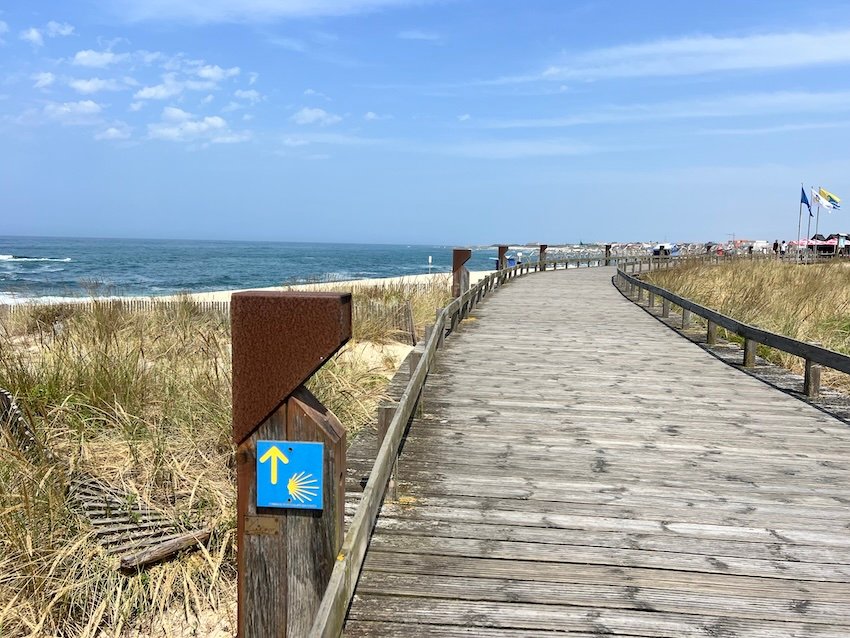
The Senda Litoral of the Portugese Camino is a perfect walk for those who have limited time complete one of the Caminos to Santiago de Compostela. Among the different Portugese Camino variants, the Senda Litoral stood out to me as it follows the Portugese Coast more than any other variant – including the official “Caminho da Costa” (“Coastal” varient). Ever since walking the Camino Frances in 2022, I have been interested in walking one of the other Camino routes. The Portuguese Camino, Senda Litoral was appealing for its length – around 300KM from Porto to Santiago de Compostela – meaning it can be walked in about 2 weeks.
Content:
- Which Portuguese Camino Variant to Walk?
- Travel and Logistics
- How to plan accommodations
- Packing
- Budget
- Final thoughts on the Portuguese Camino – Senda Litoral
This post includes affiliate links. If you make a purchase via one of these links, I may receive a small percentage at no extra cost to you.
Which Portuguese Camino Variant to Walk:
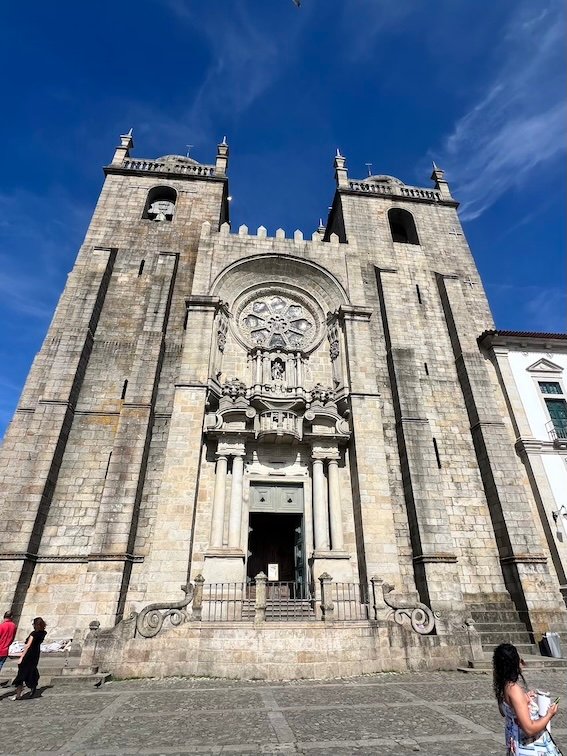
The most popular Portuguese Variants start from Porto – roughly 300KM from Santiago de Compostela in Spain. These routes include: Camino Portugues Central, Camino Portugues da Costa (official), Camino Portugues da Costa (Senda Litoral), Camino Portugues Variante Espiritual.
The Portuguese route can be a much longer route (nearly 700KM) if you start from Lisbon – however, it is widely considered that the most beautiful parts of the Portuguese Camino variants start from Porto. Having returned to work since my sabbatical in 2022, I no longer had 5-6 weeks it would take to walk one of the longer Caminos so doing one of the Portuguese Camino variants starting from Porto seemed to fit well into a 2 week vacation from work.
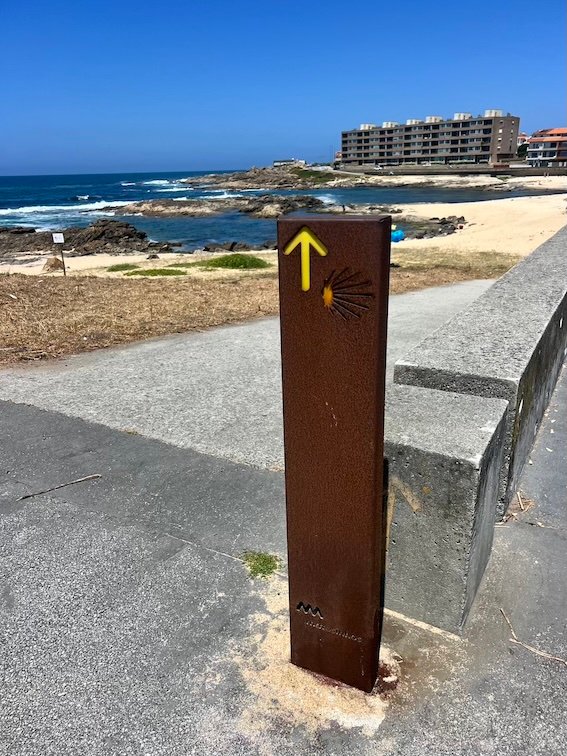
As I am a lover of the ocean, I chose to walk the Senda Litoral as it follows the coast more than all other Portuguese variants when starting from Porto – including the confusingly named “Camino Portugues da Costa” – or the “Coastal Route” which has significant inland portions compared to the Senda Litoral.
Travel and Logistics:
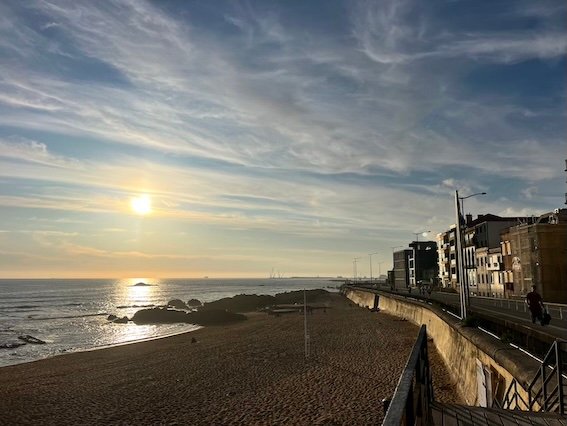
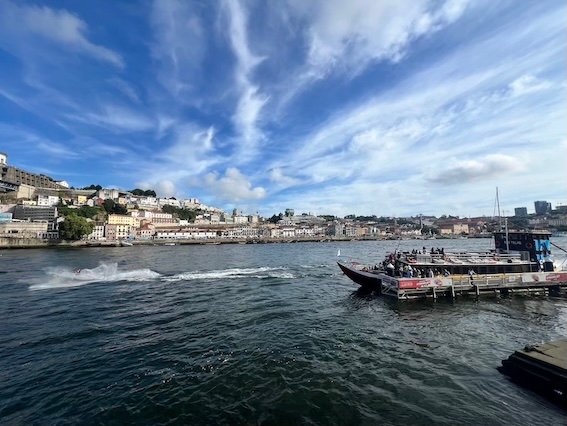
The main starting point for most Portuguese Camino routes begin in the beautiful city of Porto. This is very convenient as Porto is a major European transportation hub, and is easily reachable by air, train and bus. The same goes for the longer Portuguese Camino route from Lisbon – which is also a major European transport hub.
Many routes on the Portuguese Camino are served by backpack transfer services like Paq Mochilla. While I did not use a backpack transfer service when I walked the Portuguese route, I did use Paq Mochilla on the French route, and the service was exceptionally easy to use and seamless. Backpack transfer services are great if your bag is too large to carry day-to-day on the Camino, and in cases when you need to take the load off for a day or two but do not want to stop walking.

How to Plan Accommodations:
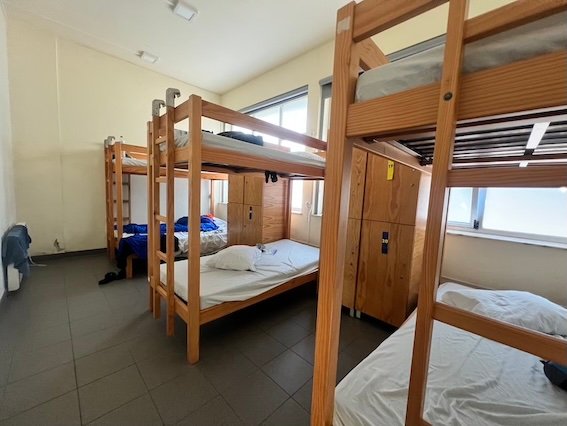
The Camino de Santiago has become increasingly popular in recent years. Whereas I mostly had no trouble finding daily accommodations without pre-booking on the French Route (the most popular Camino route) – I would actually recommend pre-booking fully refundable accommodations on the Portuguese Camino when possible. The Portuguese Camino routes are not as popular as the French Route, so accommodations are more limited by comparison. Quite a few towns that I stayed in were completely sold out – so pre-booking is a good idea so you don’t need to stress about finding a place to sleep during your walk.
Packing:
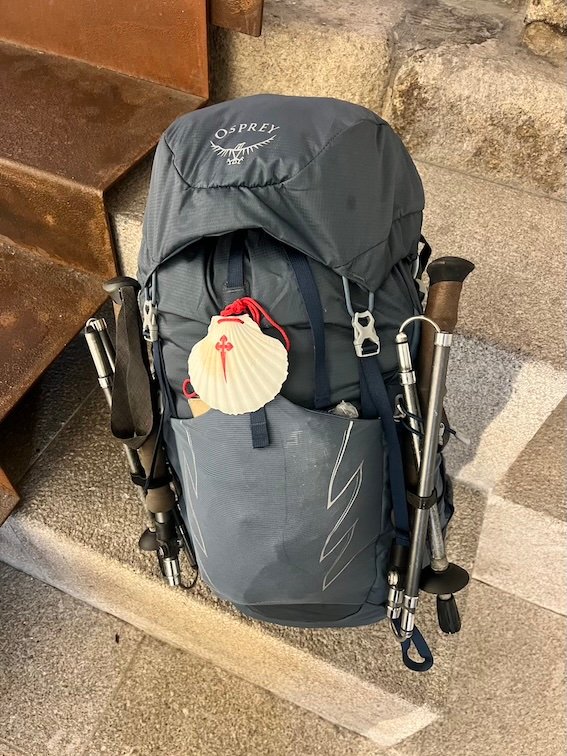
The lighter our pack, the more enjoyable and successful your trek will be. Keep to the 10% of your body weight (to a maximum of 10KG) as a strict guideline for your pack weight, as every gram carried over the course of hundreds of kilometres will cost you and your joints. For those going with a luggage transfer service like Paq Mochilla – congrats – you don’t have to be so stringent with your day pack – as your items can be transferred from one destination to the next every day, but for those not using a bag transfer service, here’s an essential packing list:
- On my first Camino, I walked in Saloman’s Quest 4D hiking boots (women/men) – they are considered some of the best hiking boots in the market and were great footwear for the round-the-world nature of my sabbatical year. I’ve come to realize that hiking boots are overkill for the Camino. I wore Altra Lone Peak trail runners for my walk on the Portugese route and would now recommend them over hiking boots for the Camino. As you’re typically not carrying heavy loads on the Camino, hiking boots are overkill, and worse – do not allow your feet to breathe which can cause blisters. Trail running shoes allow your feet to breathe and are much lighter which also helps you walk more efficiently. Many Camino walkers also swear by Hoka Speedgoat trail runners.
- 20 – 30L hiking backpack. The Osprey Talon (Women’s version: Osprey Tempest) is one of the best hiking backpacks on the market.
- Hiking poles I use these tri-fold hiking poles that can fit into my daypack when not in use.
- 2L water bladder (highly recommended so you don’t have to reach back or take off your backpack to get a drink of water. You’ll want to hydrate often given the conditions.
- Headlamp – for walking in the pre-dawn hours. I prefer using a rechargeable headlamp to avoid disposable batteries.
- Power bank. I used this one on various multiday hikes including 6 days on Kilimanjaro. Avoid powerbanks over 20000mAh for trips involving air-travel.
- Sunscreen. I love using La Roche Posay SPF 50 for Kids a super-powerful sunscreen that’s also gentler on my sensitive skin.
- Brimmed hat or ballcap – very important to keep the sun off your face
- Flip-flops or hiking sandals for showering and post-hike
- 2-3 quick-drying t-shirts. You basically have to wash your shirt every day and have an extra to wear in case it’s not dry by the next day. A 3rd T-shirt is wise, just in case. I love Icebreaker Merino t-shirts (women/men)– as they dry quickly and resist odors even after multiple wears. I basically alternated between 2 icebreaker t-shirts for the Camino.
- 1-2 pair shorts – one for hiking, another for post-hike (optional).
- Lightweight towel
- Bar shampoo – I use this as my everything soap.
- 2-3 pairs of hiking socks. I use Icebreaker Merino socks (women/men), as they have a lifetime guarantee. If your socks ever develop holes, just send open a claim online with some photos, and Icebreaker will send you a giftcard for the value of the socks!
- 1 pair of convertible hiking pants (men/women) – useful for keeping the chill off in the mornings and for converting to a pair of shorts if the day heats up.
- 1 long sleeve shirt (for the evening)
- 1 hoody or mid-layer – if you’re hiking in the cooler months, you might need an extra layer to keep the chill off I the evenings
- 1 rainshell (just in case it rains, but it is also helpful for keeping the wind off in the evening, and also in the pre-dawn hiking hours. Consider these ultralight packable jackets (women/ men)
- Rain poncho. This super light (about 50grams) rain poncho can go over both you and your backpack. Excellent value for weight – and an absolute must-have on the Camino.
- Toque/beenie – in the predawn hours it will be chilly – it is useful to have a hat
- Silk sleep sack – weighs only about 100g and worth its weight in Gold. Definitely have one of these. Unfortunately there have been reports of bed bugs in some accommodations – a sleep sack will offer some protection against this.
- Body Glide – stop blisters before they begin by using this preventative balm on your feet – a very thin layer will do – and unlike Vaseline, this stuff doesn’t stain or gunk up your socks.
- If you did not take my previous advice about the Body Glide and find yourself with Blisters – you can try these blister pads to help allievate sore spots. Truthfully though, if you get blisters, the best way to get rid of them to drain them with a sterile needle and cover the small wound with antibiotic gel and a band-aid. You’ll find your way on this.
- Antibiotic ointment in case you need to drain blisters.
- A needle – and alcohol gel to sterilize it when you need it
- BandAids
Budget:
Accommodations as of the Summer of 2025, was approximately 20 – 25 Euros per night in Albergues (hostels), and food and drink will run you approximately 15 – 20 Euros per meal at a restaurant. For my part, I typically only had one meal at a restaurant each day – typically the evening meal, and sometimes stopped somewhere for a coffee and something light in the morning; then snack on items I bought at grocery stores along the way. This meant food ran me about 20 – 30 Euros on a typical day on the Camino.
I would estimate a bare-basic Camino Budget – which would involves a lot of preparing your own meals and maybe having one restaurant meal a day, along with some drinks (wine is cheaper than water on the Camino!) would run you the following:
Accommodations: $240 – $350 Euro*
Food: $240 – $420 Euro*
Total**: $480- $770 Euro**
*low range based on 12 nights, and high range based on 14 nights
**Not including the price of transportation and extras like a backpack transfer service. Estimates based on Summer 2025 pricing – adjust for inflation accordingly
Final thoughts on the Portuguese Camino – Senda Litoral Route:
The Senda Litoral is a beautiful variant of the Portugese Camino. The Senda Litoral follows the oceanside more than all other variants of the Portugese Way – including (ironically) the Caminho da Costa or “Coastal” route of the Portugese Camino.
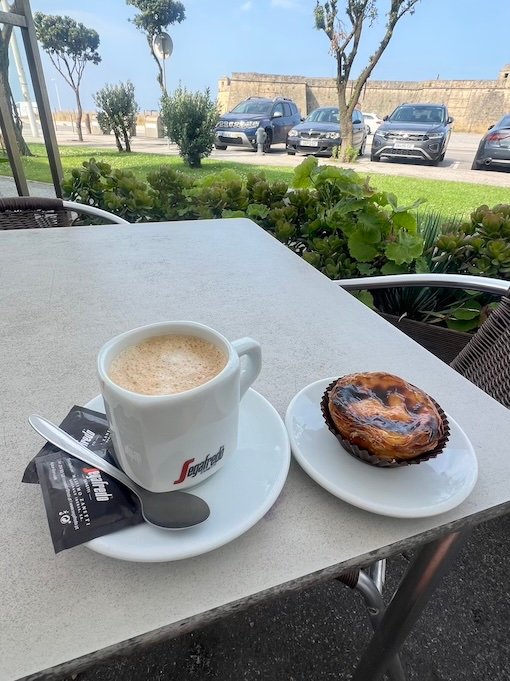
I loved walking along the seaside, cooled by the ocean breeze, and especially enjoyed eating as may Pasteis de Nata as possible along the way before transitioning into Spain for the last part of the route to Santiago de Compostela. There was one day when I pretty much only ate Pasteis da Nata and it still honestly wasn’t enough!
While an absolutely stunning Camino, the Senda Litoral is less trodden than more popular routes like the French Route – so accommodations can and do sell out. This is one route where I would recommend pre-booking fully-refundable accommodations – especially if you’re a slow walker or a slow riser (like me), as first-come-first serve options like the municipal albergues also regularly completely book out by time the slower walkers get in.
Overall, the Senda Litoral of the Portuguese Camino is a perfect length for those who have a limited time to walk to Santiago de Compostela. The route takes approximately 2 weeks from Porto, and there is much to enjoy in terms of scenery, history and food along the way.